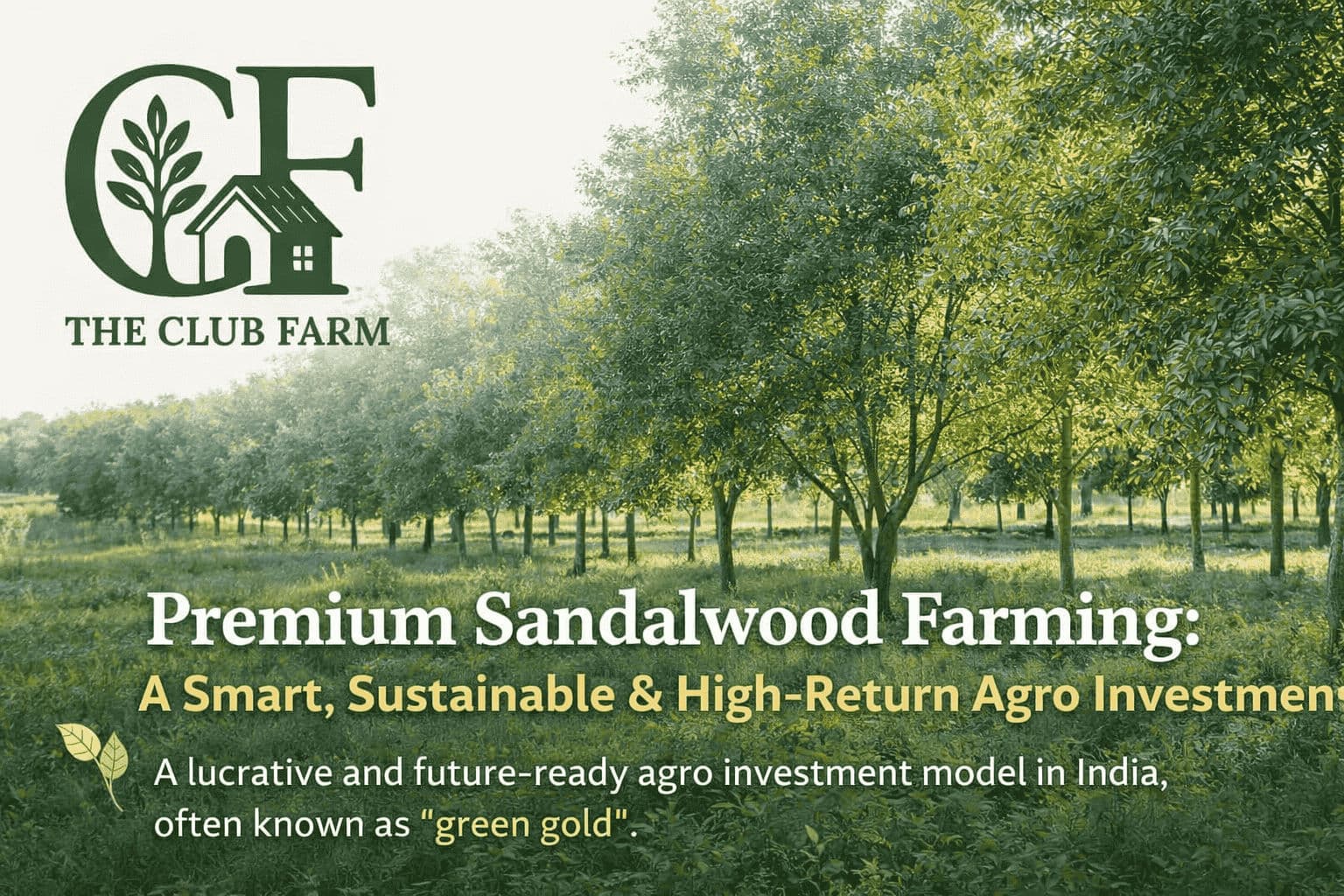
Premium sandalwood farming is one of the most lucrative and future-ready agricultural investment options in India. Often called "green gold," sandalwood is prized for its fragrance, medicinal properties, and limited supply. Sandalwood cultivation in Karnataka — India's largest producing state — has grown steadily since restrictions eased, yet supply still lags far behind demand, which has kept prices rising for over a decade.
Unlike seasonal crops, sandalwood is a long-horizon timber investment. It rewards patience and professional management, not quick returns — which is exactly why it pairs well as a diversification option alongside a more liquid asset like a farmhouse plot near Garhmukteshwar rather than as a replacement for one.
What is premium sandalwood farming?
Premium sandalwood farming is the scientific cultivation of high-quality sandalwood trees using agroforestry techniques, quality saplings, and sustainable land management. The goal isn't just growing trees — it's producing elite-grade sandalwood with high oil content and strong heartwood quality.
This model suits investors, landowners, and agri-entrepreneurs who want stable, long-term returns rather than short-term gains, and complements the broader range of luxury farmhouse projects near Garhmukteshwar for buyers looking to diversify a single land purchase.
Why sandalwood is a high-value crop
Sandalwood has been valued for centuries because of:
- Use in Ayurveda and traditional medicine
- Demand in perfumes, cosmetics, and essential oils
- Religious and spiritual significance
- Strong domestic and export demand
Natural sandalwood reserves have been shrinking for years. A 2025 Down To Earth report on Karnataka's sandalwood sector put top-grade heartwood prices as high as ₹78 lakh per tonne — roughly ₹7,800 per kg at the high end — while other industry sources cite retail rates up to ₹20,000 per kg depending on grade and region. That price spread reflects genuine scarcity, not hype, which is what makes premium sandalwood cultivation an inflation-resistant, long-term asset rather than a speculative crop.
Climate, soil & growing conditions
A successful premium sandalwood plantation needs:
- A warm tropical to semi-tropical climate
- Well-drained red, sandy loam, or laterite soil
- Moderate rainfall
- Suitable host plants for nutrient support
Sandalwood is semi-parasitic and depends on companion host plants for healthy growth. Trees typically mature in 12 to 15 years, depending on soil quality and plantation management.
Sandalwood investment: cost & returns
This is the question every serious investor asks first, so here are the real numbers.
Plantation cost
Industry-reported setup costs for a professionally managed sandalwood plantation typically fall between ₹80,000 and ₹1,20,000 per acre, covering saplings, host plants, irrigation setup, and early-stage maintenance. Costs vary based on land preparation needs, irrigation infrastructure already in place, and planting density.
Return potential
A mature, well-managed acre can support several hundred trees. At the market rates cited above, a single mature tree can be worth well into six figures at harvest — one reason sandalwood is often cited as one of the higher long-term-return-per-acre agricultural investments available in India. These are industry-wide reference figures, not a guarantee: actual yield depends on survival rate, soil health, tree density, and how well the plantation is maintained over 12–15 years.
Timeline
Expect a 12–15 year horizon before full harvest value is realized. Sandalwood is not a fit for investors who need liquidity in under a decade — for that, a farmland or plot investment near Garhmukteshwar is the more comparable option.
Risk factors to disclose honestly: tree survival rates vary, theft and pest management require ongoing vigilance, and long maturation periods mean returns are not realized until harvest. A professionally managed plantation model reduces — but doesn't eliminate — these risks.
Legal guidelines for sandalwood farming in India
Legality is the single biggest concern for first-time sandalwood investors, and it's a fair one to have — the rules genuinely differ by state.
In Uttar Pradesh specifically — where The Club Farm is located — current reporting indicates the Uttar Pradesh Forest Act does not list sandalwood among the species requiring prior permission for cultivation, unlike 29 other regulated plants. Sandalwood agroforestry is already being practiced in UP's Tarai region, including districts like Siddharth Nagar, Gonda, and Gorakhpur.
That said, forest and land-use policy changes over time — Karnataka alone has revised its sandalwood rules multiple times since 2001, most recently in 2023 — so treat the above as a snapshot, not a permanent guarantee. Before investing, confirm the current position directly with:
- Your state (or district) forest department, for any registration or permission requirements that may apply to your specific location
- A property or agricultural lawyer, for tree ownership documentation tied to your specific land title
- Local precedent, i.e. whether other landowners in your district are already growing and harvesting sandalwood without issue
Because these rules can shift, verify current requirements before committing funds — don't rely solely on any single source, including this article, for legal compliance decisions.
Sustainability & environmental benefits
Premium sandalwood farming isn't just profitable — it supports:
- Sustainable agroforestry
- Soil conservation
- Green cover expansion
- Long-term land value appreciation
As climate-conscious investing grows, sustainable sandalwood plantation models are increasingly popular among investors who want both financial and environmental returns.
Why investors are choosing sandalwood
Modern investors are shifting toward agro-investments that combine safety, sustainability, and appreciation. Sandalwood stands out because:
- Demand is global and consistent
- Supply is genuinely limited
- Timber value rises as trees age
- Land value tends to appreciate alongside plantation growth
That combination makes it a fit for long-term wealth building and legacy planning — often as a complement to, rather than a substitute for, a more traditional agricultural land purchase near Garhmukteshwar.
Conclusion
Premium sandalwood farming is a strategic, multi-year investment in land, patience, and future value. With proper legal verification and professional plantation management, it can deliver strong long-term returns while contributing to environmental conservation. It's not the right fit for anyone needing short-term liquidity — but for a 12–15 year horizon, few agricultural investments offer a comparable combination of scarcity-driven value and land appreciation.
FAQs
1. Is premium sandalwood farming profitable in India?
Yes — sandalwood farming is widely considered profitable due to rising demand, constrained supply, and high per-kg market value. Returns are realized at harvest (12–15 years), not annually, so profitability depends on holding the investment for the full maturation period.
2. Is sandalwood investment worth it compared to other agricultural investments?
Sandalwood typically requires a longer holding period than a farmhouse or plot investment, but offers a different return profile — value concentrated at a single harvest event rather than steady appreciation. It suits investors specifically looking for a long-horizon, scarcity-driven asset alongside — not instead of — other real estate holdings.
3. How much does it cost to start a sandalwood plantation per acre?
Industry-reported setup costs generally range from ₹80,000 to ₹1,20,000 per acre for saplings, host plants, and initial maintenance. Ask for the specific per-acre cost and management terms of any plantation project before investing.
4. How long does it take for sandalwood trees to mature?
Typically 12 to 15 years, depending on soil quality, climate, and plantation management.
5. Is sandalwood farming legal on private land in Uttar Pradesh?
As of the most recent available reporting, the Uttar Pradesh Forest Act does not specifically regulate sandalwood the way it does 29 other listed species — but forest policy changes over time, so confirm the current position with your local forest department before investing.
6. What type of soil is best for sandalwood cultivation?
Well-drained red soil, sandy loam, or laterite soil with moderate fertility.
7. Does sandalwood farming require daily maintenance?
No. After the initial establishment phase, maintenance needs are relatively low compared to seasonal crops — one reason it appeals to long-term, hands-off investors.
8. Why is sandalwood called green gold?
Because of its high market value, growing scarcity, and long-term price appreciation — a combination rare among agricultural assets.
Read also: